
Plan review · Seating
Modern 2×6 Bench
A plan by Ana White · reviewed by ThePlanStack, July 2026
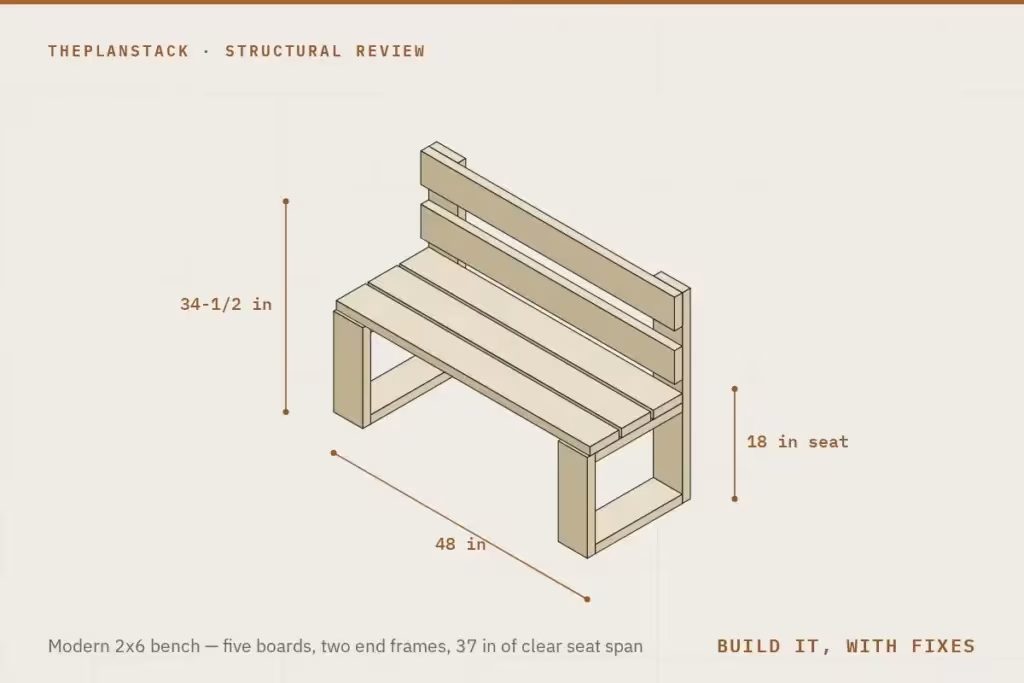
The seat is the easy part — three 2x6s over a 37-inch span barely notice an adult; what needs fixing is untreated feet lying flat on the ground and a light bench that tips backward when empty.
- Cost$60-$90
- SkillBeginner
- TimeAn afternoon
- Holds~450 lb
The honest take
What the plan doesn't tell you
• The feet sit flat on the ground and the plan buys plain SPF for them. Each end frame lands on a 16-1/2 inch 2×6 lying face-down, which is the worst possible orientation for shedding water. On grass or soil, untreated whitewood there is a two-or-three-season part. Use pressure-treated for the six leg supports, or set the bench on pavers.
• Empty, this bench tips backward under about a 30 lb push at the top of the back — a stability ratio of 0.64 where we want 1.0. It is only 68 lbs on a 19-1/2 inch footprint with a 34-1/2 inch back, and our weight estimate runs on the heavy side for SPF, so a real one is likelier worse than better. There is no cheap fix: the base would have to run about 30 inches front to back to clear the check. Nobody sitting on it is in danger — a seated adult settles it. A child climbing the back is.
• There is no glue anywhere in the materials list, and every joint on this bench is a butt joint. Nothing braces it front to back except the five boards. Glue every mating face as you go — it is the difference between a bench that stays tight and one that starts to sway in three summers.
• Lay out your cuts before you cut. Five boards is enough, but only if you take one 48-inch piece from each: 48 + 16-1/2 + 16-1/2 off three boards, 48 + 34-1/2 off the other two. Try to get two 48s out of one 8-footer and you need 96 inches plus a saw kerf out of a board that is 96 inches long.
• The backrest is the part we could not check. Both back slats were excluded from the load model as non-structural, so nothing here says what happens when someone leans hard on a 48-inch back that is screwed to two legs. Run the numbers by hand and a 150 lb lean puts a back leg at about half its allowable bending stress, with the whole moment landing in the screws where the frames meet the legs. Use three screws per joint there, as the plan’s own step 1 says, and glue them.
Five boards, three cut lengths, about fifty screws — there is genuinely nothing to this build, and the seat is the part you can stop worrying about. Three 2x6s laid flat over a 37-inch clear span is a lot of wood under one person, and the numbers say so: a third of the allowable bending stress and a twentieth of an inch of sag. Where the plan gets thin is everything that is not the seat. Every joint is a butt joint, glue is not in the materials list, nothing braces the bench front to back except those same five boards, and the feet are untreated 2x6 lying flat on the ground under a bench the plan calls suitable for outdoors. None of that is hard to fix and none of it costs much. Fix it and this is a genuinely good first project.
Who it's for
Who should build this — and who should skip it
A first build in the truest sense: three cut lengths, one fastener, no joinery to learn. A circular saw and a drill will finish it in an afternoon. It is a porch, firepit or entryway bench — 48 inches seats two adults comfortably and three at a squeeze. Skip it if it has to stand on grass or bare soil in untreated pine, and think twice if small children will treat the back as something to climb.
The checks
What we checked, and what held
Holds ~450 lb safely
Finished size 34.5H x 48W x 19.5D
The seat carries normal use with margin. The rating is held down by stability and by joints that rely on screws alone.
- Governing member
- Seat board, between the end frames
- Material
- SPF 2x6 laid flat
- Cross section
- 1.50 in × 5.50 in
- Orientation
- Laid flat
- Clear span
- 37.0 in
- Load applied
- 103 lb
- Measured sag
- 0.0501 in
- Working load
- ~450 lb
- Finished weight
- 68.2 lb
Load case the share of the code's 300 lb seating patch that reaches the worst-placed of the three seat boards - the case that governs
| Check | Result |
|---|---|
| Bending in the seat board, between the end frames — 31% of allowable | PASS |
| Sag in the same member — L/738 against an L/360 limit | PASS |
| Legs and frame posts in compression (1%) | PASS |
| Screwed joints (11% worst of 22) | PASS |
| Racking, front to back (safety factor 18, all of it from the screws) | PASS |
| Tip-over resistance, unloaded — ratio 0.64 against a 1.0 target | ADVISORY |
Empty, a 30 lb push at the top of the back tips it. Keep it on firm level ground, and do not let children climb the backrest.
There is no small fix. Clearing the check needs a base about 30 in front to back instead of 19-1/2 - 11 in of extra leg support behind the back legs, and a sixth board to cut it from. Site it sensibly instead; a seated adult settles it.
The structural reality. The seat is not what limits this bench. Three 2x6s laid flat, carried on end frames set 42-1/2 inches apart, leaves each board a 37-inch clear span — short, for a board 5-1/2 inches wide. We loaded it the way the code loads seating: 300 lbs of occupant concentrated over a 30-inch patch at midspan, of which about 103 lbs reaches the worst-placed board. It bends 0.05 inches, one part in 738 of the span, and works the wood to 31% of its allowable bending stress. Nothing else on the frame is near its limit: the legs and posts run at 1% in compression, and the hardest-working of the 22 screwed joints sits at 11%. Our working number is ~450 lbs spread across the seat, which still leaves stiffness in hand; the boards reach the standard sag limit nearer 600 lbs, and they are a long way from breaking at either figure.
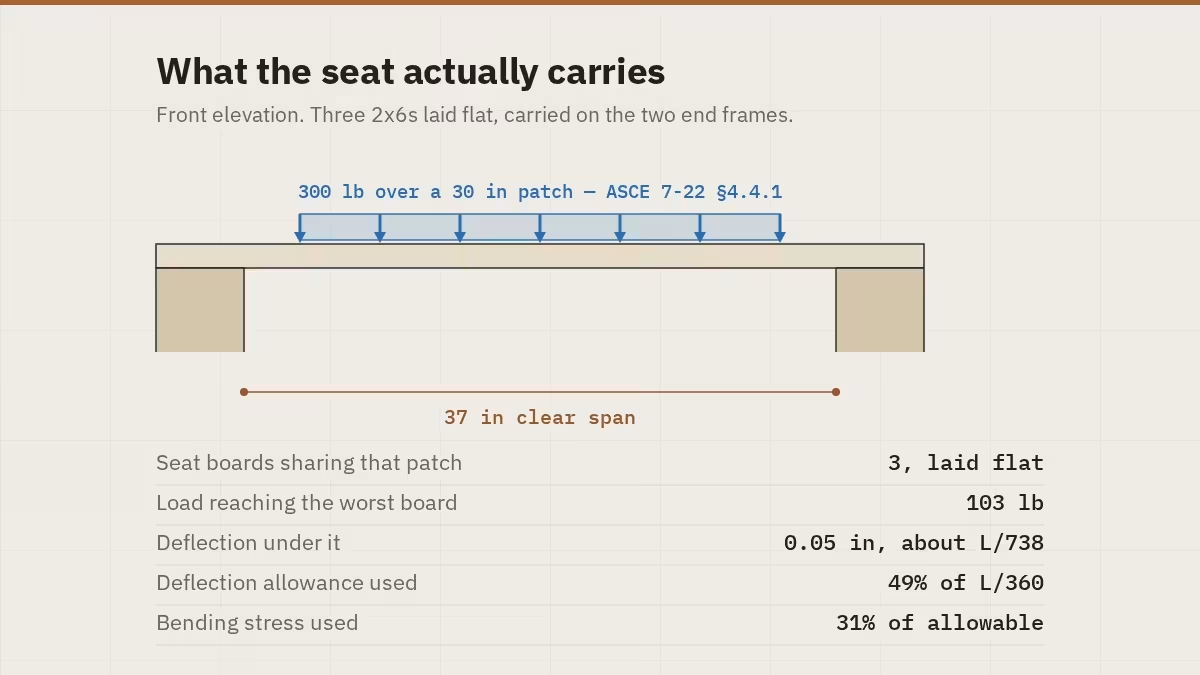
Why this is a review and not a green light. Two things pull the rating down, and neither is the seat. The first is tipping. The bench weighs about 68 lbs and stands on a footprint 19-1/2 inches deep with a back 34-1/2 inches tall. Empty, a 30 lb shove at the top of the back puts it over backward — a stability ratio of 0.64 against the 1.0 we want. Sit on it and that arithmetic changes completely, which is why the model treats it as advisory rather than a structural failure, and why it does not force the verdict down on its own. It still matters on a porch, on grass, or anywhere a child might climb the back. The second is that every joint here is a butt joint carrying its load through fasteners, and glue appears nowhere in the plan’s materials list. Front-to-back racking is resisted by those screws and nothing else — no brace, no panel. The model gives that a safety factor of 18, which is comfortable — but every bit of it comes from the fasteners, and screws in softwood loosen after a few seasons of people dropping into a bench.
The one the model cannot see. The feet. Each end frame rests on a 16-1/2 inch piece of 2×6 lying flat on the ground, and the shopping list is plain SPF — the plan’s own FAQ recommends pressure-treated or cedar for outdoor furniture, but the materials list does not. Untreated softwood lying face-down on soil or grass wicks water and stays wet; that is the part of this bench that will fail first, and it will fail by rotting, not by breaking. Buy pressure-treated for the six 16-1/2 inch supports, or stand the finished bench on pavers or feet.
What we would change. Glue every joint as you assemble it. Put the six leg supports in treated stock or keep the feet off the ground. And lay the cuts out one 48-inch piece per board, never two: five boards are enough for the whole bench with 13 inches to spare that way, and exactly zero to spare if you try to take two 48s off a single 8-footer.
These are planning estimates, not a stamped engineering analysis. Wood varies board to board, and assembly quality matters as much as the arithmetic — for anything safety-critical, check with a qualified pro.
Furniture mode, analysis v7.0. Planning estimates — check anything safety-critical with a qualified pro. How we analyze plans.
Build tips
Before you build
- Set a stop block and cut in batches. Thirteen pieces come off three lengths, and the six 16-1/2 inch supports have to match or the two end frames will not sit level with each other.
- Build the two end frames on the same flat surface, one on top of the other, and check both diagonals before you drive the last screws. With no brace anywhere in this design, every bit of square the finished bench has comes out of those two frames.
- Stain or seal the boards before assembly, including the faces that end up buried in a joint, then touch up the cut ends afterwards. The plan says this too, and it is worth doing properly here — the joints you cannot reach later are the ones that hold water.
Reference
Materials & cut list
Lumber & sheet goods
- 2x6x8′ SPF (qty: 5)
Hardware
- 2-3/4 in self-tapping wood screws (qty: ~50)
- Exterior wood glue — not in the plan’s list, use it at every joint
- Medium grit sandpaper
- Exterior stain or sealer rated for decks and fences
View Full Cut List & Materials
| Part Name | Qty | Dimensions | Material |
|---|---|---|---|
| Back legs | 2 | 34.5" x 5.5" x 1.5" | 2x6 SPF |
| Leg supports | 6 | 16.5" x 5.5" x 1.5" | 2x6 SPF |
| Seat and back slats | 5 | 48" x 5.5" x 1.5" | 2x6 SPF |
Cut List Calculator
Cut List Calculator
Calculating optimal cuts...
| Part | Qty | Length | Width | Material |
|---|
Original plan
About this design
This design is Ana White’s work, not ours. We review free DIY plans and add the engineering: load paths, spans, joints, and the fixes worth making before you cut. We do not republish the build instructions. For the steps, the photographs and the author’s own notes, go to the source.
Keep looking
Other plans to compare
We have reviewed these builds too: